
How I work
Delivery & QA Work Samples
These anonymized samples show how I keep Drupal work organized from scope through handoff. The point is not just shipping code. The point is leaving behind reviewable artifacts your team can test, release, and maintain.
Confidentiality note
These examples are anonymized and lightly edited to protect client confidentiality while preserving document structure, delivery sequence, and reviewability.
Delivery phases
How complex Drupal work becomes reviewable and maintainable
Complex Drupal work becomes safer when every phase leaves a reviewable artifact behind: scope, ticket plan, implementation notes, QA evidence, release sequence, and handoff context.
01
Discovery
Clarify risk, goals, and constraints before implementation.
02
Planning
Break the work into tickets another person can follow.
03
Execution
Document decisions and implementation context as the work moves.
04
QA
Define validation steps with expected results and review points.
05
Release safety
Sequence release work so production movement stays predictable.
06
Handoff
Leave behind notes, runbooks, and ownership clarity.
Process walkthrough
Visible document structure, not excerpt summaries
These examples are drawn from different anonymized Drupal work streams and arranged by delivery phase. The goal is to show the shape of the artifacts: scope, tickets, implementation notes, QA, release sequencing, and handoff context.
Each module answers a practical buyer concern: will the work be clarified before coding, can QA validate it, can the release be handled safely, and will the next person be able to maintain it?
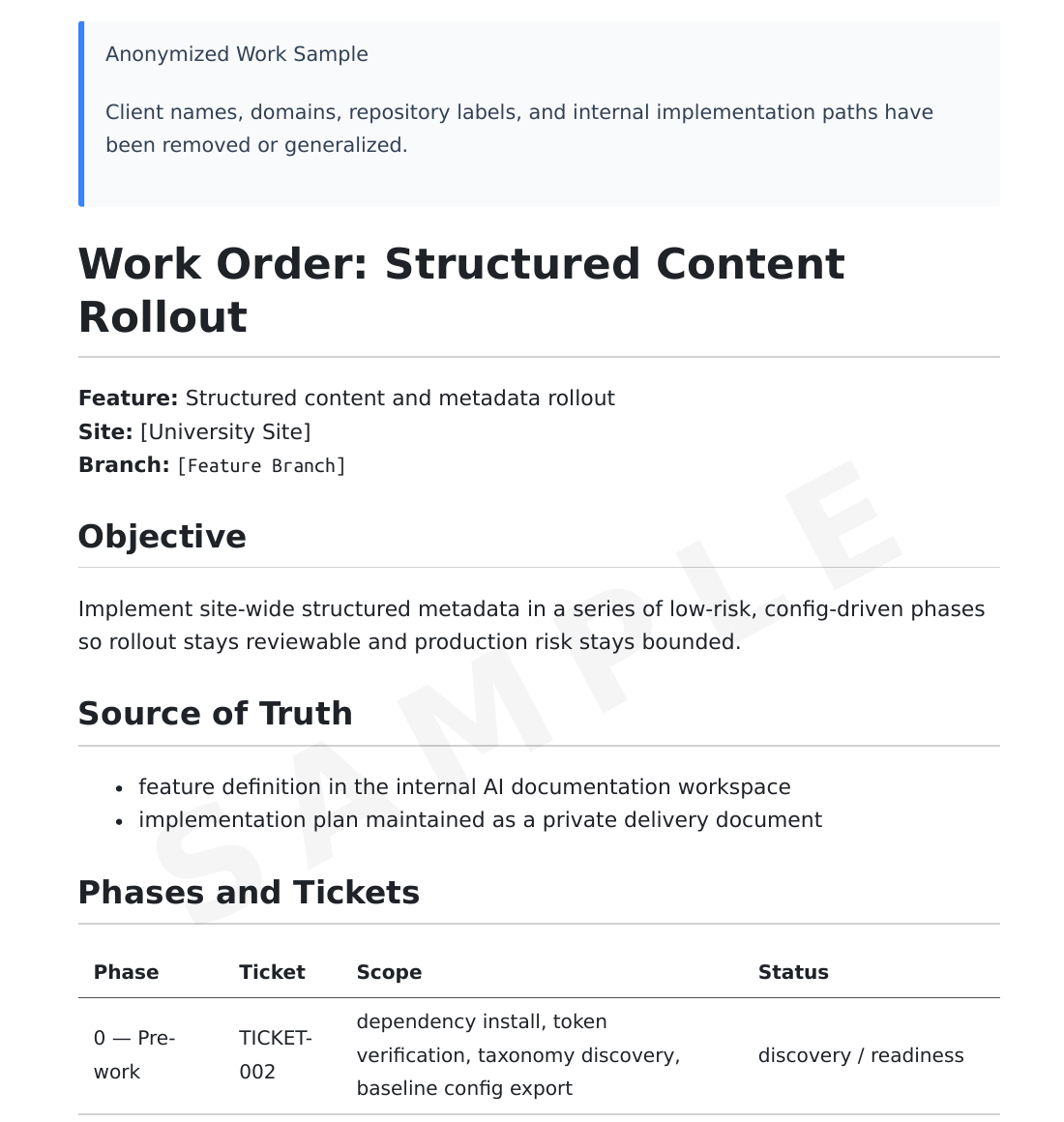
1. Scope / Work Order
Turn a broad request into phased, reviewable work
Why this exists: scope the objective, rollout phases, blockers, and pre-launch gates before implementation starts.
What this proves
The work is clarified before coding. Dependencies, sequence, and release boundaries are visible early enough to reduce delivery risk.
2. Ticket Breakdown
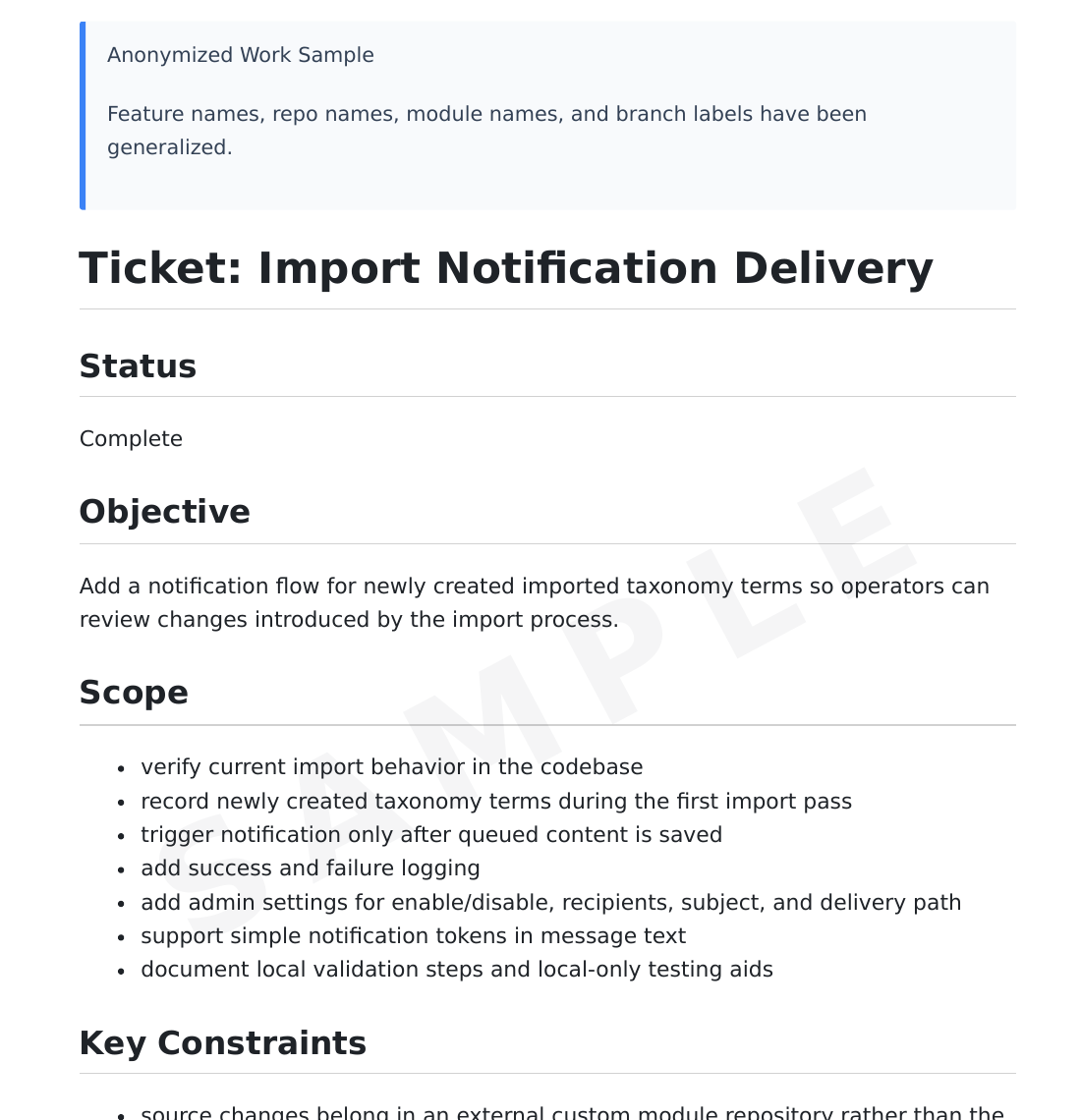
Break the work into scope, constraints, and acceptance
Why this exists: translate a feature request into bounded work another developer, PM, or QA person can follow.
What this proves
The work fits a real ticket process. It becomes bounded, reviewable implementation instead of a vague request.
3. Implementation Notes
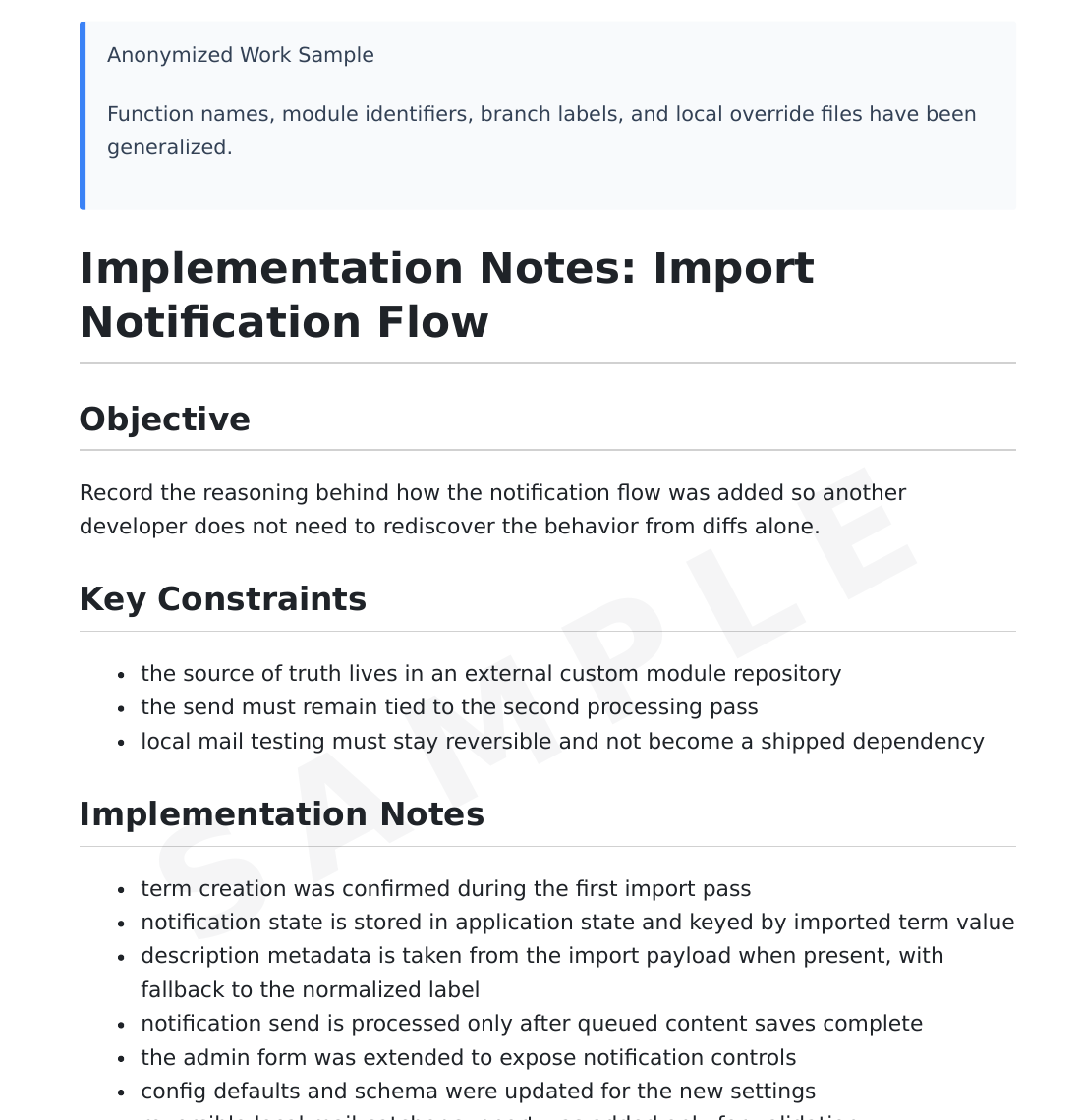
Record technical decisions close to the change
Why this exists: capture where the behavior lives, what changed, and why the delivery path stayed maintainable.
What this proves
Another developer does not need to reverse-engineer the work later. The decision trail is preserved.
4. QA / Testing Record
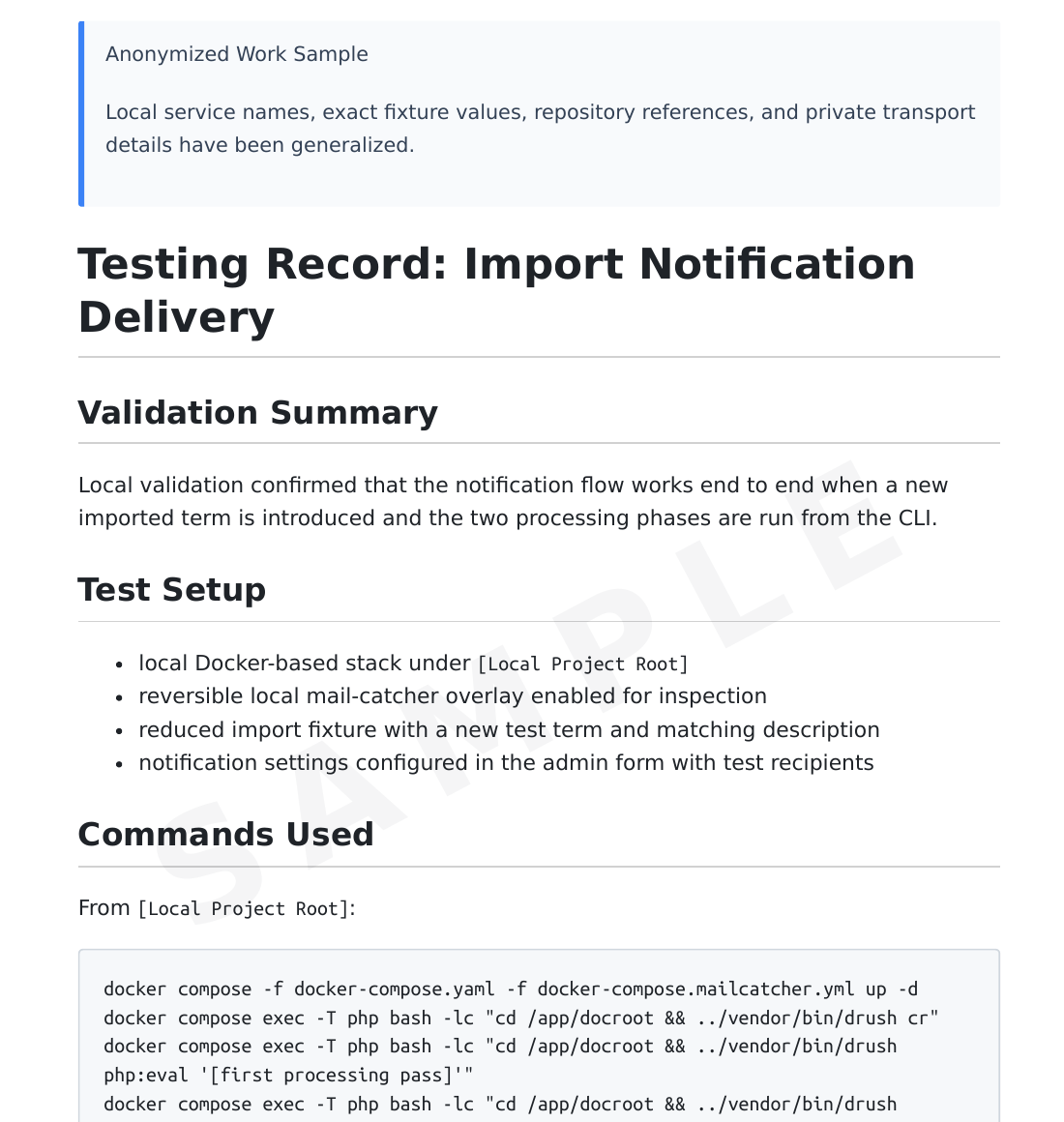
Give QA and follow-on developers a repeatable validation path
Why this exists: define setup, commands, expected outcomes, runtime notes, and remaining gaps in one place.
What this proves
QA can validate the work without guessing. The validation path is explicit, reproducible, and honest about what remains.
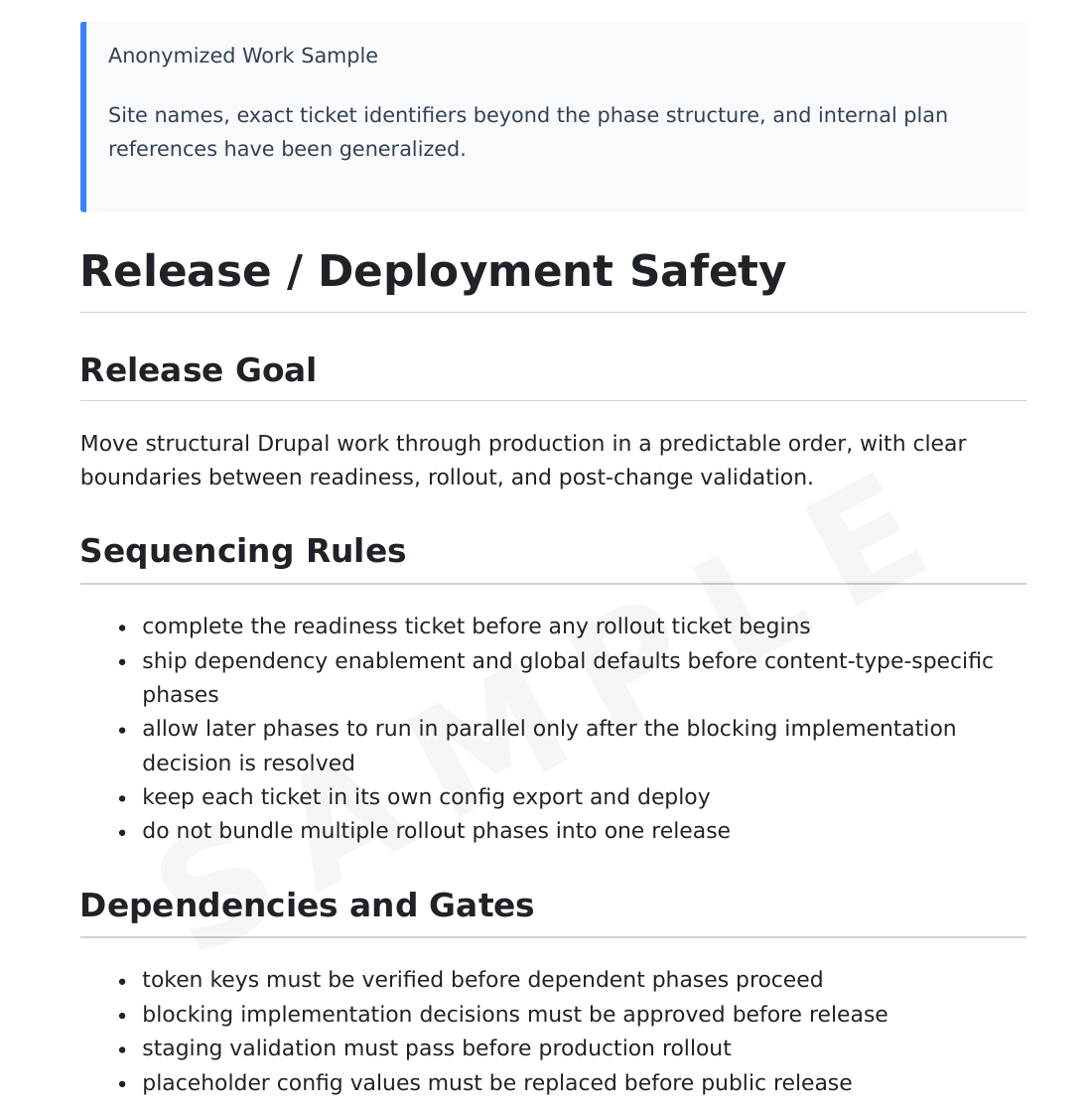
5. Release / Deployment Safety
Make release sequencing and gates explicit before production
Why this exists: define rollout order, dependencies, validation gates, and deploy boundaries before production is touched.
What this proves
The release can be handled safely. Sequence, gating, and rollback-minded thinking are visible before the move happens.
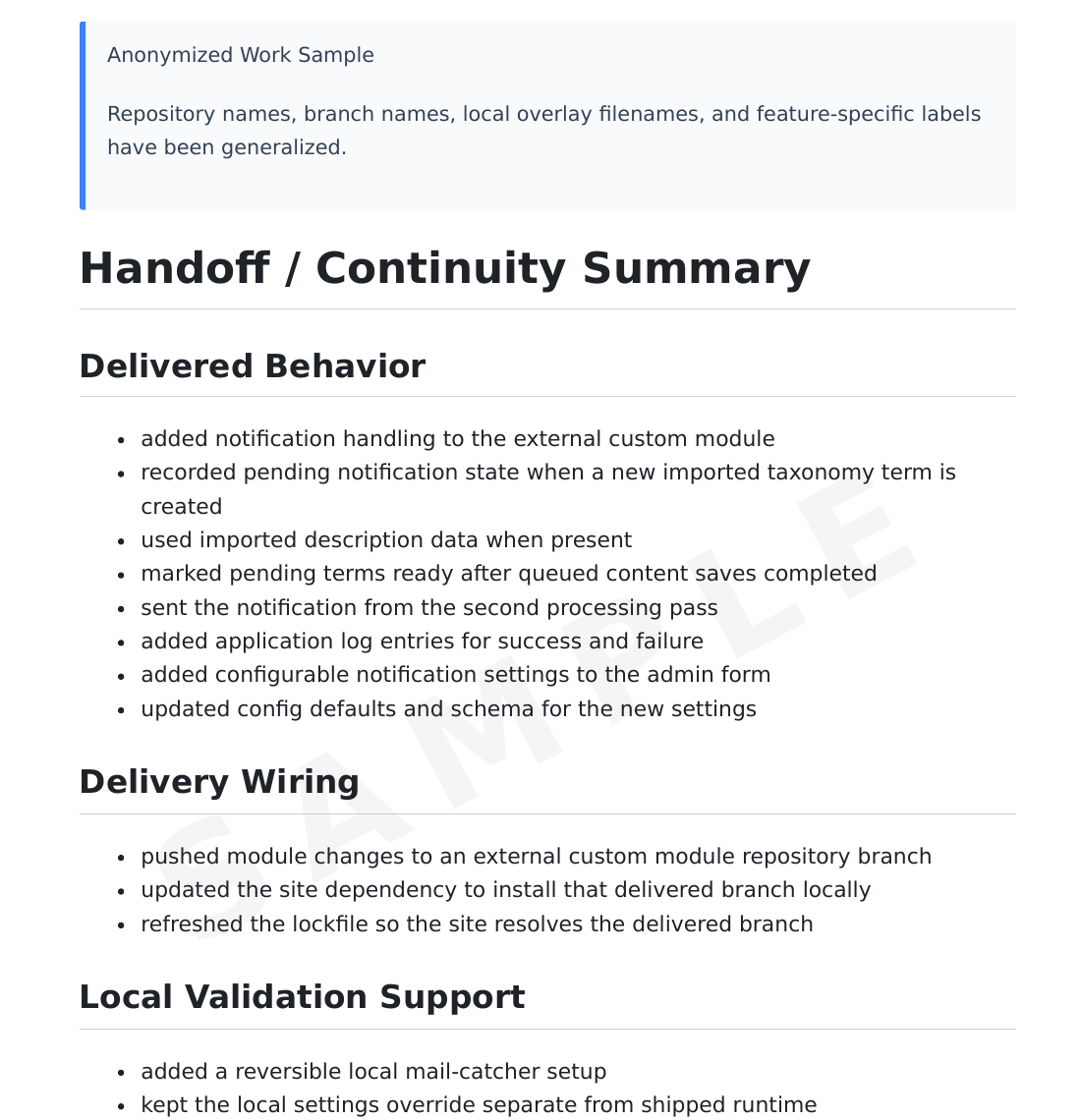
6. Handoff / Continuity Summary
Leave behind continuity instead of a bare completed diff
Why this exists: summarize delivered behavior, source-of-truth wiring, validation support, and follow-up risk for the next person.
What this proves
A client team or follow-on developer is less likely to be stuck after handoff because the work includes continuity, not just completion.
Why this matters
These samples show how delivery risk is reduced before and after coding
For agencies and in-house teams, the value is not just technical output. It is work that fits review, QA, release, and maintenance workflows without creating extra management drag.
Fits existing teams
Shows that the work can plug into PM, QA, and architecture review instead of bypassing them.
Makes review easier
Leaves behind artifacts another person can inspect, rerun, and validate without guesswork.
Captures decisions
Records why a path was chosen so teams are not forced to rediscover context during maintenance.
Improves continuity
Supports handoff, safer release work, and less maintenance debt after the initial implementation.
Confidentiality policy
How public work samples stay useful without exposing client internals
These examples are meant to preserve structure: how the work is clarified, tested, deployed, and handed off. They are not meant to recreate private project context.
- Client names, domains, repository identifiers, and private URLs are removed.
- Usernames, IDs, local environment references, and sensitive architecture details are removed or generalized.
- If a detail improves realism but weakens confidentiality, it is removed.
Editing standard
The goal is to keep the document structure legible: headings, phases, commands, checklists, validation steps, and handoff notes. Structure stays. Client disclosure does not.
Next step
Need senior Drupal help that fits an existing delivery process?
If your team needs someone who can clarify scope, leave behind QA steps, support release work, and hand off maintainable documentation, that is exactly the kind of engagement these samples are meant to represent.